
Churchyards
Have you ever wondered about Bridport’s parish churchyard?
Volunteer Graham Avis has looked into its unsettling past.
Have you ever wondered about Bridport’s parish churchyard?
Volunteer Graham Avis has looked into its unsettling past.
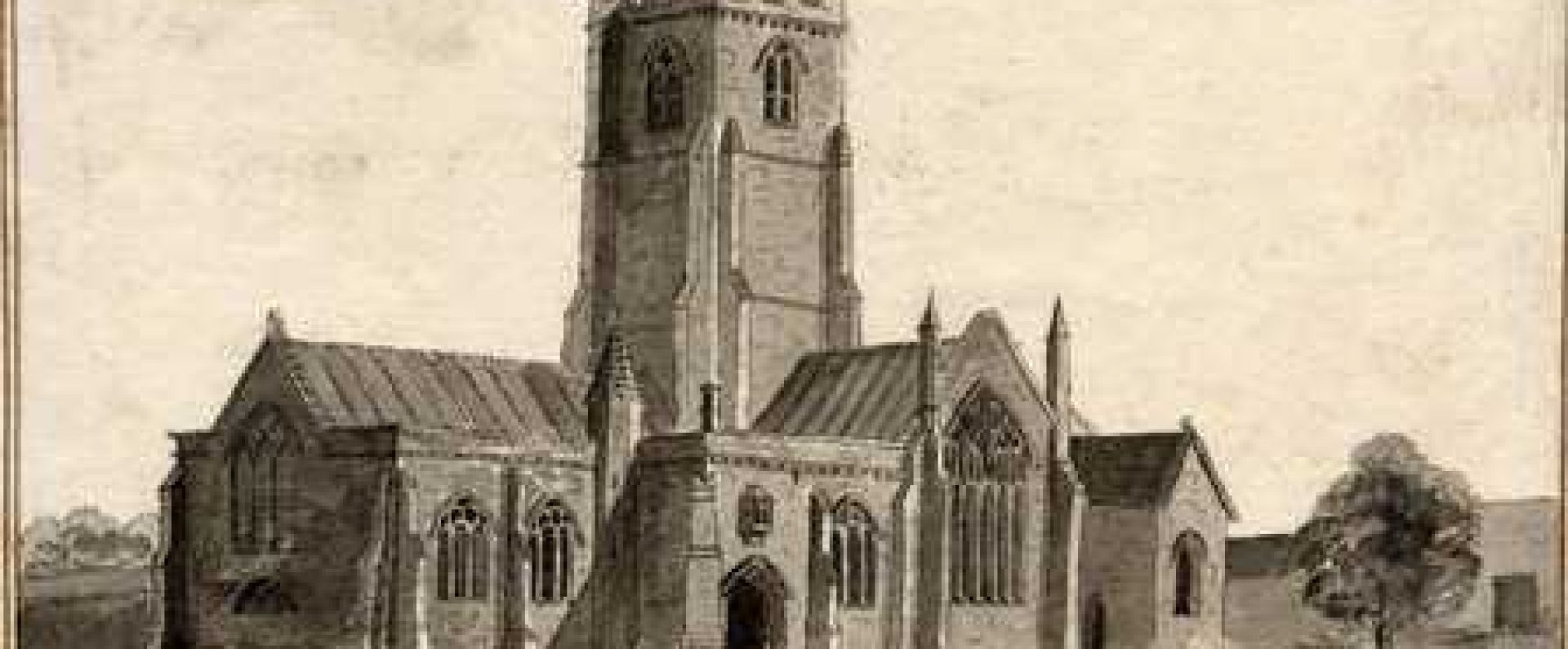
The writer Bill Bryson, in his book “At Home”, speculates that many parish churches appear to sit in a slight depression, as if their foundations have sunk; this he suggests is not sinking foundations, but instead, it is the surrounding churchyard that has risen, due to the large number of burials that have taken place within its confines. It set me wondering about our own Parish Churchyard in Bridport.
The Local History Centre has copies of the Bridport burial registers, the earliest entries being in 1600. There are some major gaps in the 17th Century (approximately 50 years are missing overall), but other than these gaps we know the names of everyone buried within the churchyard, and later within the Bridport Town Cemetery, which opened in 1855. Other than a small number of Quaker burials and a few burials near non-conformist chapels, the churchyard, and later the cemetery were the only places to be buried. Indeed until 1521 Bradpole residents and, until 1827, Allington residents were also interred in Bridport’s Parish Churchyard.
So how many are listed? Over 13,500 names are given of those in the churchyard, and if we use the average number of burials in the 17th Century to estimate the likely numbers in the missing 50 years, we can add a further 2,000 to that number, suggesting that there were over 15,500 burials between 1600 and 1855. Given that the church has been in existence since well before that date, the total number must be much greater.
How is it possible that a small churchyard can contain the remains of so many people? In 1849, the Unitarian Minister the Rvd. John Lettis Short, in a lecture at the Town Hall discussed the topic when he suggested that death rates in the town were too high. One of the causes he believed was that the churchyard was full. He suggested that “Presuming the dead body was committed to the grave for the purpose of mingling with its parent earth, ten years must be allowed for this process.” On this basis he believed that Bridport Churchyard could support up to 112 burials a year. In the seven years leading up to the lecture there had been over 120 burials per year. It was this that was the driver to open the Bridport Town Cemetery
I have found it impossible to look at the burial records other than from a 21st Century viewpoint. The number and ages of children who died, are incredible by today’s standards, and leave me reflecting how far modern science has come in preventing the tragedies that affected the 18th and 19th Century families. There is a further cause for reflection, in 1833, at the end of the parish burial record book, the Rector, Robert Broadley wrote:
“Vide Register page 74 Burial No. 586.
In the year 1832 a disorder called the “Cholera Morbus or Asiatic Cholera” extended through most of the countries of Europe, and proved fatal in many parts of England – The first case that appeared in Bridport was on 9th August when a married women name Sarah Biddlecombe, age 53, died after a few hours illness, and was buried the next day, During the following week six other persons, and many more sickened of the same complaint. So alarming and contagious was the disease now considered by people in general that the shopkeepers of Bridport complained of the stagnation of trade, from many persons in the country being deterred from coming into town through fear and exaggerated accounts of the pestilential ravages of Cholera.- there were twenty three funerals between the 15th August and the 15th September, 17 of which were registered with the letters C:M: in the margins to denote the epidemic malady which had proved fatal to the deceased.-
I have never been able to ascertain the number that had been attacked by the Cholera and recovered – but it’s remarkable that the disease in Bridport was confined to South Street, and in that street to within 60 or 80 yards of the house in which Sarah Biddlecombe lived and died.
R,B, 4 Jan 1833”
The above was written 20 years before Dr John Snow produced his theory that Cholera was a water borne disease, and subsequently convinced the medical profession that this was true. How many lives might have been saved, if the observation by Bridport’s Rector, and possibly other observers in England had been taken seriously, and used to successfully challenge the common view that the disease was spread by particles in the air?
Graham Avis- Research Volunteer
(adapted from an article original published in The Bridport Times)
All of the information included in this article is correct to the best of our knowledge. However, if you believe anything is incorrect, or would like to submit further information, then don’t hesitate to get in touch.