The Bridport Tiger
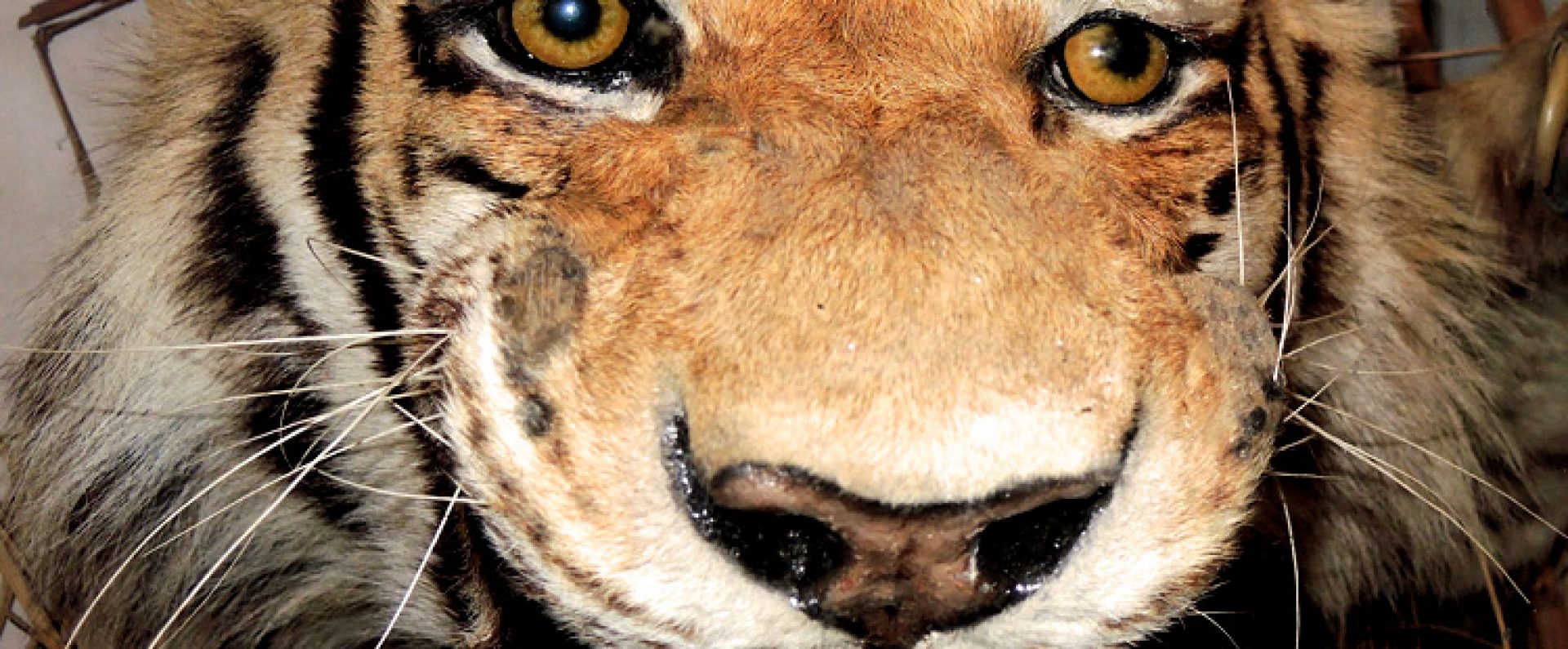
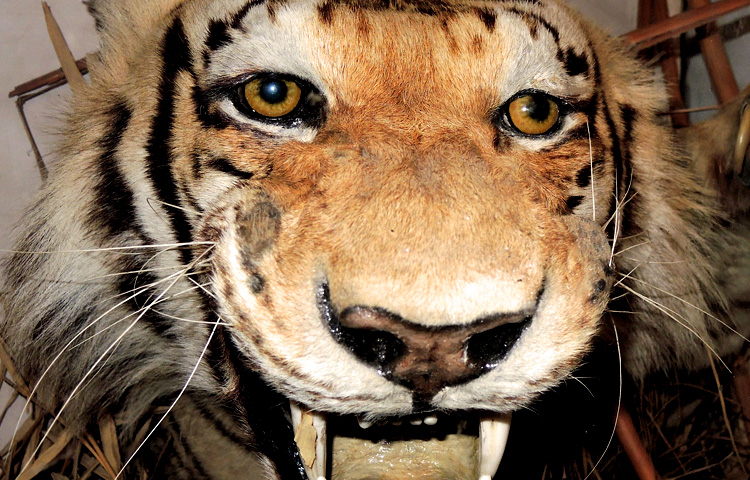
Why is there a tiger in the Museum, and what has it got to do with Bridport?
Why is there a tiger in the Museum, and what has it got to do with Bridport?
There are a number of times I have heard people ask this question. It makes me wonder why people ask this specifically of the tiger. Why not the stuffed squirrel in the next case? Perhaps it’s because people are so surprised to see such a large animal in a local history museum. But many museums have natural history collections: only just up the road in Exeter, the Royal Albert Memorial Museum house ‘Gerald the Giraffe’, alongside an elephant and a tiger. In some Museums their taxidermy eve operate their Twitter feeds…. Perhaps it is because in 2018 we feel uneasy about the ethics of killing and preparing animals as status symbols?
When we were planning the new displays for the redeveloped Museum, there was never any question as to whether we would display our tiger or not. He’s been here for many years, and lots of locals remember visiting him as a child. He’s one of those museum artefacts that seems to have acquired significance purely through being here, and has been a kind of mascot.
Placing him in a prominent position also gave us the opportunity to talk about the history of the Museum itself and its collections. I had long been keen to reveal more about the collections that are in storage: how we collect things, how we care for them, and what some of the constraints on collecting are. We have around 20,000 items in storage, with only about 5% on permanent display. As we acquire more, it gets harder and harder to provide adequate conditions and management for them.
So, why do we have a tiger at all? When the Museum was founded in the 1930s, there was no such thing as a Collecting Policy, so many things were taken in with little consideration to their significance or relationship to the town. According to some old notebooks he was donated by 1951 by the Mr. Gundry who lived at the Hyde in Walditch. It doesn’t give any indication of why he chose to give it to the town.
Strangely enough, we have lately discovered that the tiger does have some historical significance. When cleaning him for display we found a label which indicated that he was prepared by Rowland Ward (1848-1912), who was a very popular 19th Century taxidermist. He had a shop in Picadilly called ‘The Jungle’, which became a social institution for sporting enthusiasts.
But even if our tiger technically had no ‘historical’ significance, I would still keep him on display. I really like the fact that taxidermy is controversial. As a Curator, I don’t think I have the authority to consciously ‘edit’ and ‘sanitise’ history to only show the nice, clean and ‘safe’ bits. Not only that, but we miss the opportunity for debate. Within the first few weeks of being open last year I heard a great conversation between a young boy and his father: ‘Dad, why is that tiger here?’, ‘Well, just because people did things in the past, doesn’t mean we would necessarily do the same thing nowadays.’ Perfect: yes, we should consider and challenge the past to help inform the kind of future that we want to create for ourselves.
Emily Hicks- Director
(adapted from an article original published in The Bridport Times)
All of the information included in this article is correct to the best of our knowledge. However, if you believe anything is incorrect, or would like to submit further information, then don’t hesitate to get in touch.