A Waistcoat Fit For a Wedding
Textile Volunteers Lindsay and Frances explain more about one of the few men’s items in our textile collection
Textile Volunteers Lindsay and Frances explain more about one of the few men’s items in our textile collection
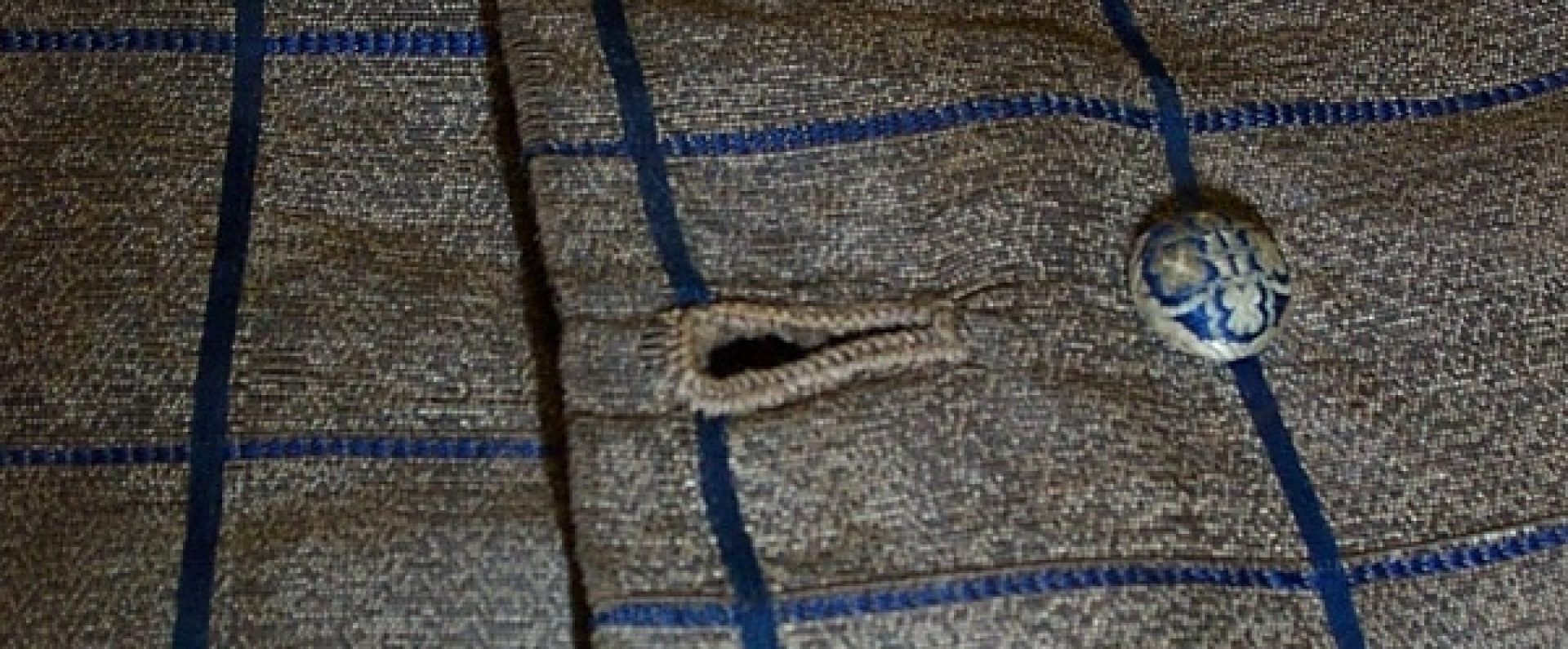
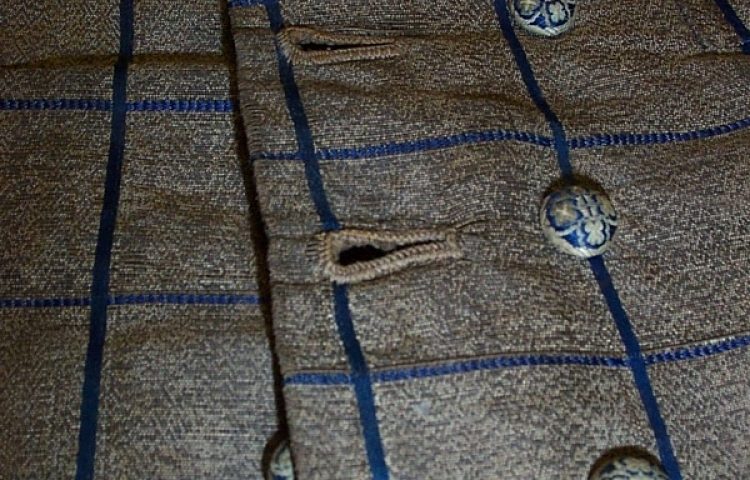
Joseph Gear was the proud wearer of this elegant waistcoat for his wedding to Jane Coombs in 1859 at Burton Bradstock village church. Tailor-made of woven silk with a checked pattern in grey and blue and with hand embroidered silk buttons, it has been well looked after by later generations and kept as something special. The style, with its shawl collar, revers and welt pockets, dates it to the 1840s, suggesting it might have been a second-hand gift to Joseph.
The origins of the waistcoat or vest can be precisely dated to 1666 when Charles II issued a proclamation that the vest should be recognised as proper court attire. He was impressed with the colourful and embroidered garment brought to the court from Persia by travellers. Originally worn with frock coat and breeches, it became plainer and more fitted by the 19th century, eventually becoming part of the 20th century three piece suit.
This waistcoat is one of the many interesting items in the textile collection at Bridport Museum, and the details we have about Joseph’s life adds to this interest. So many of the pieces in our collection have little or no provenance (background information), and despite research, their history cannot be traced. Thanks to the donation and past research by Joseph’s grand-daughter, Mrs Dorothy Mansfield, we have a fascinating account of the owner, together with some portraits from the family photo album.
Joseph’s first job, aged 14, was as a plough-boy, although he had abandoned this life on the land by the time of his marriage to Jane. One day in 1840, he became distraught at the sight of his master beating the young horse which pulled the plough, despite Joseph’s protestations. From then, he resolved to leave the farm and go to sea; he packed a few belongings and set off on foot for the 40 mile journey to Poole. On reaching the harbour he signed on for a voyage on a whaler bound for Labrador in Canada. The tough and hard life at sea was a dramatic change from his life in rural Dorset, but he remained at sea for five years, searching for whales in the cold Northern waters.
Returning home as an experienced sailor, he joined the merchant navy as an able seaman and often sailed from West Bay on ships taking locally grown hemp to distant ports. One of these vessels, a two-masted sailing brig called the ‘Why Not’, was owned by James Templeman, a Bridport draper. Alas, the ‘Why Not’ foundered on the Skerry rocks off the Scottish Coast in February 1881, and Joseph was drowned, along with five other local men.
This item, like so many in our collection was a ‘family best’, kept for special occasions such as Sunday church, weddings, funerals and other significant events. It is not surprising that our textile collection contains few everyday items, as these clothes were worn continually until they fell apart. They were often heavily patched or remade, as a tough and impoverished life also meant that clothes were handed down from one member of the family to another.
Lindsay Pritchard and Frances Pearsall- Textile Volunteers
(adapted from an article original published in The Bridport Times)
All of the information included in this article is correct to the best of our knowledge. However, if you believe anything is incorrect, or would like to submit further information, then don’t hesitate to get in touch.