The Bridport Union Workhouse
Many of the historic buildings in Bridport have a rich history, many having had several different ‘identities’ over the centuries.
Volunteer Jon Smith takes a look at one such building: the workhouse.
Many of the historic buildings in Bridport have a rich history, many having had several different ‘identities’ over the centuries.
Volunteer Jon Smith takes a look at one such building: the workhouse.
In keeping with many other market towns, Bridport has numerous roads named for their location, usage, or after the original owner of the piece of land. North, South, East and West Streets spread out from the Town Hall area (although I’ve yet to find a reason why North Street is so tiny and narrow in comparison to its companions). Similarly West Bay Road (previously known as Harbour Road) leads to that part of Bridport, and Gundry Lane is a tip of the hat to the rope and net producing family of the same name. So – can we assume that Barrack Street was home to an army barracks? The answer is not quite that straightforward.
Barrack Street leaves the north side of East Street opposite the Lord Nelson Hotel. Incidentally, as you stroll, you will pass The Lyric Theatre, the site of Bridport’s first cinema, The Electric Palace, which opened in 1912 and had its own power supply, seventeen years before mains electricity arrived in the town. After approximately 150 yards, Barrack Street changes its name to St Andrews Road at a building that you could easily think had housed a barracks. You’d be wrong, as you’ll soon discover!
The word ‘barrack‘ comes from ‘barraca‘, an old Spanish word which translates as ‘hut’ and originally referred to temporary shelters or huts for people and animals. There were wooden huts constructed just off of East Street at some time, and in the early 19th century, with England in fear of an invasion by Napoleon’s forces, Hanoverian troops were stationed there to protect the town and the surrounding area. When victory at Waterloo in 1815 removed that threat, the protecting forces were disbanded or redeployed, the huts were demolished, and the British War Office sold off the land in 1816.
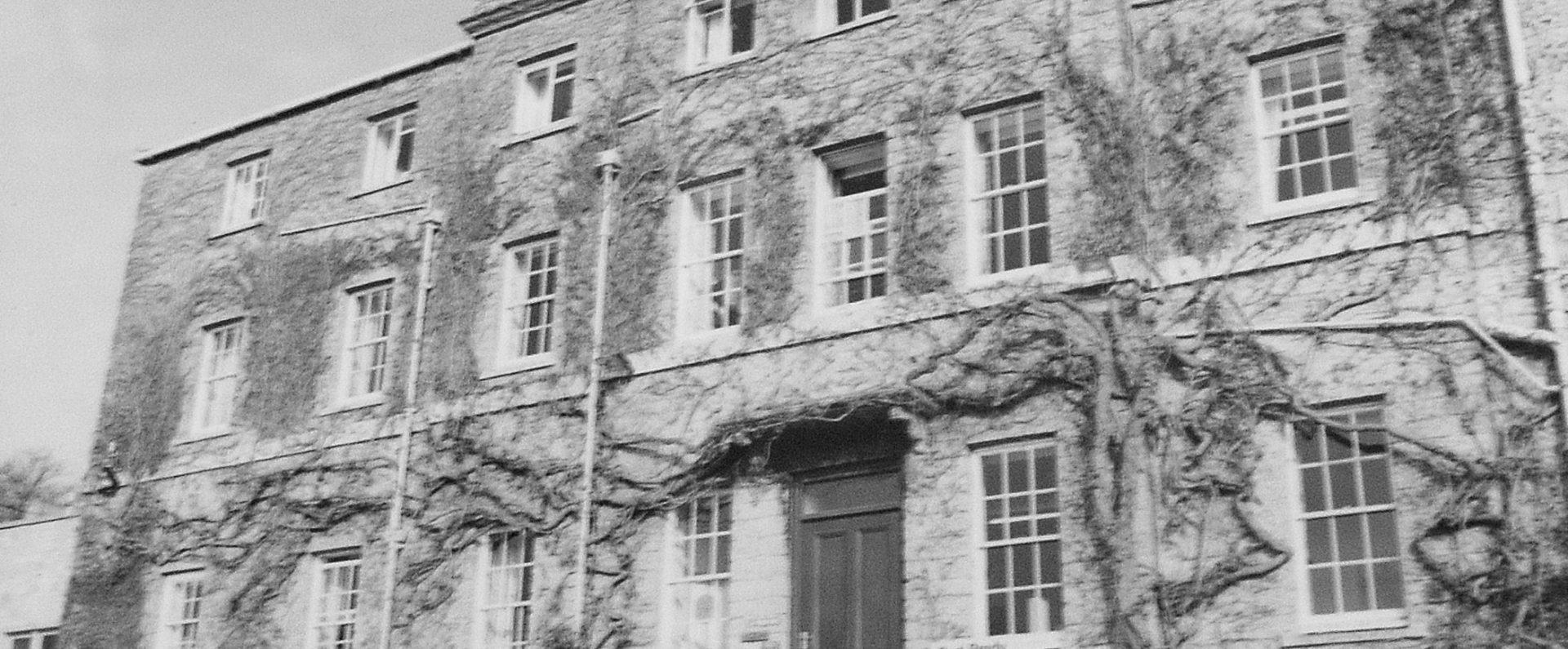
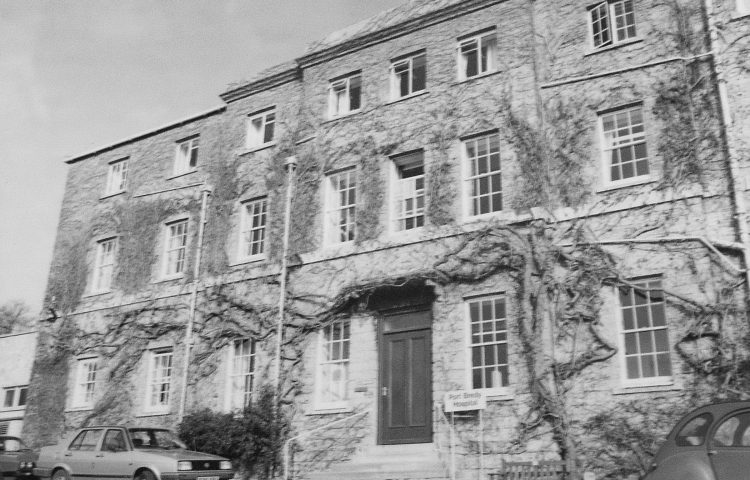
On 28th March 1836, an imposing building was opened at the junction of Bedford Place and Barrack Street – it is this structure that is easily mistaken for a military barracks, although its original purpose was very different! At the time of its construction, this was one of the largest workhouses in Bridport, accommodating two hundred people. The workhouse system was designed to be as tough and difficult as possible to deter the ‘work-shy’ from using it as an easy option. It did however also provide accommodation and work for those genuinely unable to find employment or provide support for their families. Inmates worked from 6am to 8pm, and while most of their labours contributed to the running of what was officially known as the Bridport Union Workhouse, many of them worked in the local industries, primarily rope and netmaking. In the workhouse records, inmates were usually classified as ‘paupers’, although some are additionally labelled as ‘lunatics’ and one simply as an ‘idiot’. The oldest person in the workhouse was recorded as being 87 years of age.
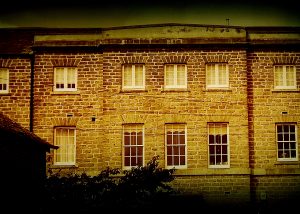
In 1914, the label of ‘workhouse’ was dropped from the Bridport Union facility and it became an ‘Institute For The Mentally Deficient’. In 1948, the year the National Health Service was launched, the Institute became a geriatric hospital and was renamed Port Bredy Hospital (after the fictional town of the same name that author Thomas Hardy modelled on Bridport). The hospital closed in 1996 and the building was converted into luxury flats four years later.
So – not a barracks, but a workhouse for the poor which, 184 years later, was transformed into seventy nine separate homes with an average 2020 value of £318,000………
Jon Smith- Volunteer
All of the information included in this article is correct to the best of our knowledge. However, if you believe anything is incorrect, or would like to submit further information, then don’t hesitate to get in touch.
Jon used information gathered by previous Museum Volunteers to compile this article. Unfortunately there is no record of who actually did the research, but if you recognise this as your work, please contact the Museum and we will be pleased to give you credit for your efforts.